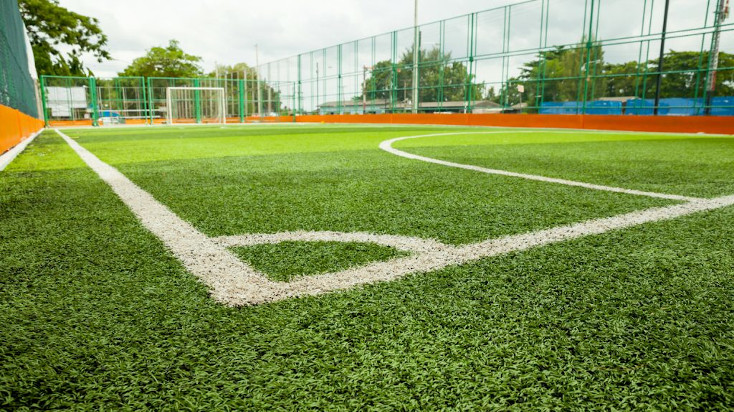
Overseas moves to tighten controls on artificial turf raise questions Australian communities deserve answered before their next sporting field is approved.
Who takes responsibility for a synthetic field when it wears out? What evidence supports claims about its chemical content? And who pays if recycling arrangements fail to materialise?
These questions are gaining legislative attention in the United States. They should also be central to sporting-field decisions here in Australia.
An article published by US law firm Venable on 13 October 2026 highlights expanding scrutiny of artificial turf, covering product composition, public procurement and end-of-life responsibility. Its relevance extends well beyond the American market: councils are buying surfaces that carry obligations long after installation.
Link to article: https://www.venable.com/insights/publications/chalk-talk/artificial-turf-laws-and-regulations-are-expanding
Who is responsible when the field wears out?
One significant New York proposal would establish collection and recycling arrangements specifically for artificial turf within the state’s existing extended producer responsibility framework.
Bill S10168A would require separate collection standards and recycling rates for turf and infill, alongside producer participation, reporting and cost responsibilities. The proposal recognises that removing a sporting field involves different materials, equipment and transport arrangements from collecting household carpet. It remains proposed legislation, rather than an enacted requirement.
For Australian councils, this raises a straightforward question: why should ratepayers accept an uncertain disposal liability when suppliers are promoting the benefits of installation?
A claim that a surface is “recyclable” does not, by itself, establish that the field will actually be recycled.
Before awarding a contract, councils should require clear answers:
- Which facility will accept the worn surface and its infill?
- What proportion will become usable recycled material?
- What happens to material that cannot be recovered?
- Who pays for removal, transport, processing and disposal?
- What protection exists if the nominated recycler or supplier stops operating?
These answers should form enforceable contract commitments, supported by evidence.
Scrutiny extends beyond infill
Another New York proposal, Bill S6868, would prohibit installing or replacing synthetic turf on outdoor athletic fields owned or operated by municipalities or school districts. Its proposed scope extends beyond a particular infill material. The official legislative record currently lists it in the Senate Environmental Conservation Committee; it is not an enacted statewide ban.
The distinction matters. Proposed restrictions should never be presented as existing law.
However, the breadth of this proposal is relevant to local debate. Changing the infill does not answer every question about the complete surface. Councils still need to examine the carpet, backing, shockpad, maintenance requirements and eventual waste stream.
The Natural Turf Alliance’s position is that assessments must consider the entire system over its working life.
NSW already expects environmental assessment
Australian decision-makers do not need to wait for overseas legislation to ask harder questions.
NSW has published a synthetic-turf decision-making guideline and an environmental assessment addendum. The NSW Planning website states that determining authorities must apply the addendum when preparing a review of environmental factors for synthetic sporting-field projects covered by the specified development-without-consent pathway. This includes relevant new fields and upgrades.
These requirements should lead to transparent, site-specific scrutiny.
For a local community, that means understanding how a proposal addresses heat, flooding, runoff, material loss, maintenance, replacement and disposal—and how the proposed response compares with a properly designed natural-turf alternative.
Publishing a reassuring summary is insufficient if the underlying assumptions cannot be tested.
Give modern natural turf a fair assessment
The NTA believes every major conversion proposal should include a credible assessment of best-practice natural turf.
That assessment should examine what improved drainage, soil construction, irrigation, grass selection, maintenance and scheduling could deliver at the particular site. It should identify achievable playing capacity, required investment and ongoing operating costs.
Comparisons should use the same assessment period and consistent assumptions. Synthetic replacement cycles and disposal costs belong in the calculation, alongside natural-turf renovation and maintenance.
Communities need to know whether their sporting needs can be met while retaining a living surface—and what each option will cost over time.
A stronger standard for Australian supplier accountability
Our assessment is that the overseas developments point towards greater supplier accountability and more demanding purchasing decisions. They do not establish what Australian governments will legislate next, but certainly they do provide a useful test for today’s decisions.
Would the project still represent good value if suppliers had to substantiate every environmental claim, fund the promised end-of-life arrangements and disclose the full cost of repeated replacement?
Australian councils should apply that test now. Public money deserves a complete business case, communities deserve transparent evidence, and best-practice natural turf deserves serious consideration before a field is converted.